
| Availability: | In stock |
| Delivery time: | Hurry! Buy Now before it is GONE! |
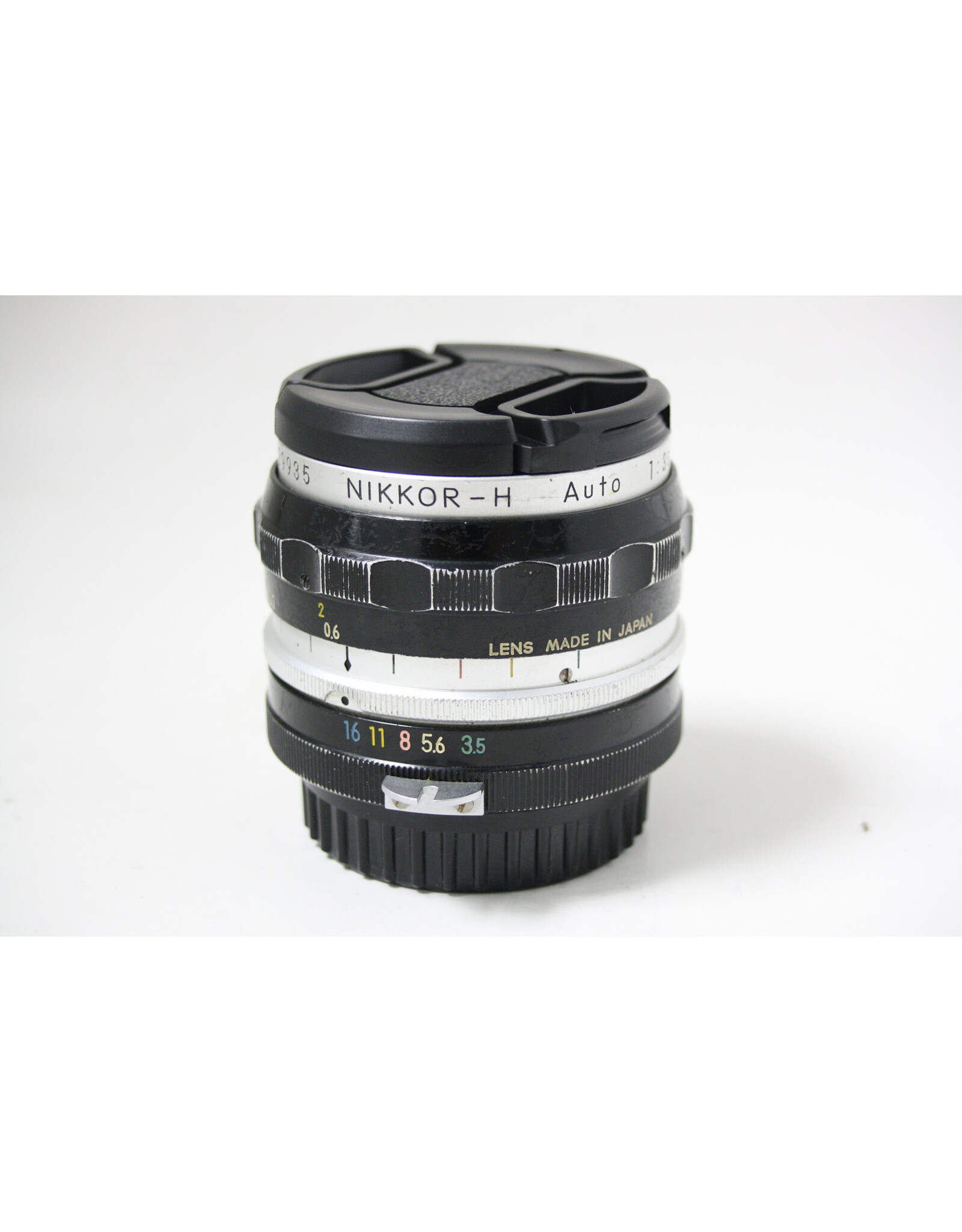
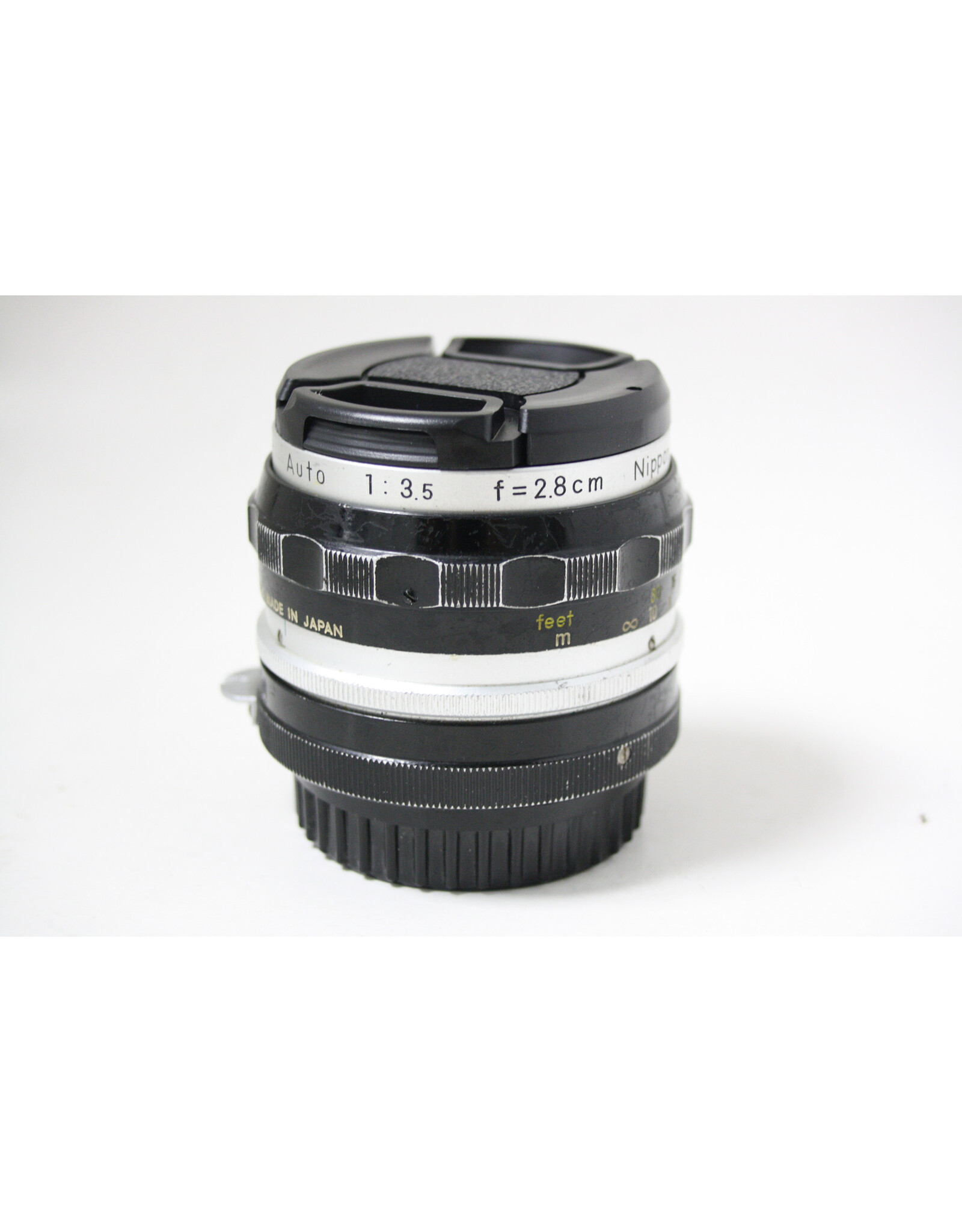
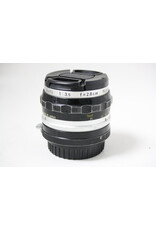
NOTICE: This is a pre-owned product. This item may not come with its original packaging, and may not have all of the original accessories. Camera Concepts thoroughly tests, and ensures the quality of all pre-owned products we advertise. See below for a more detailed description of the product.
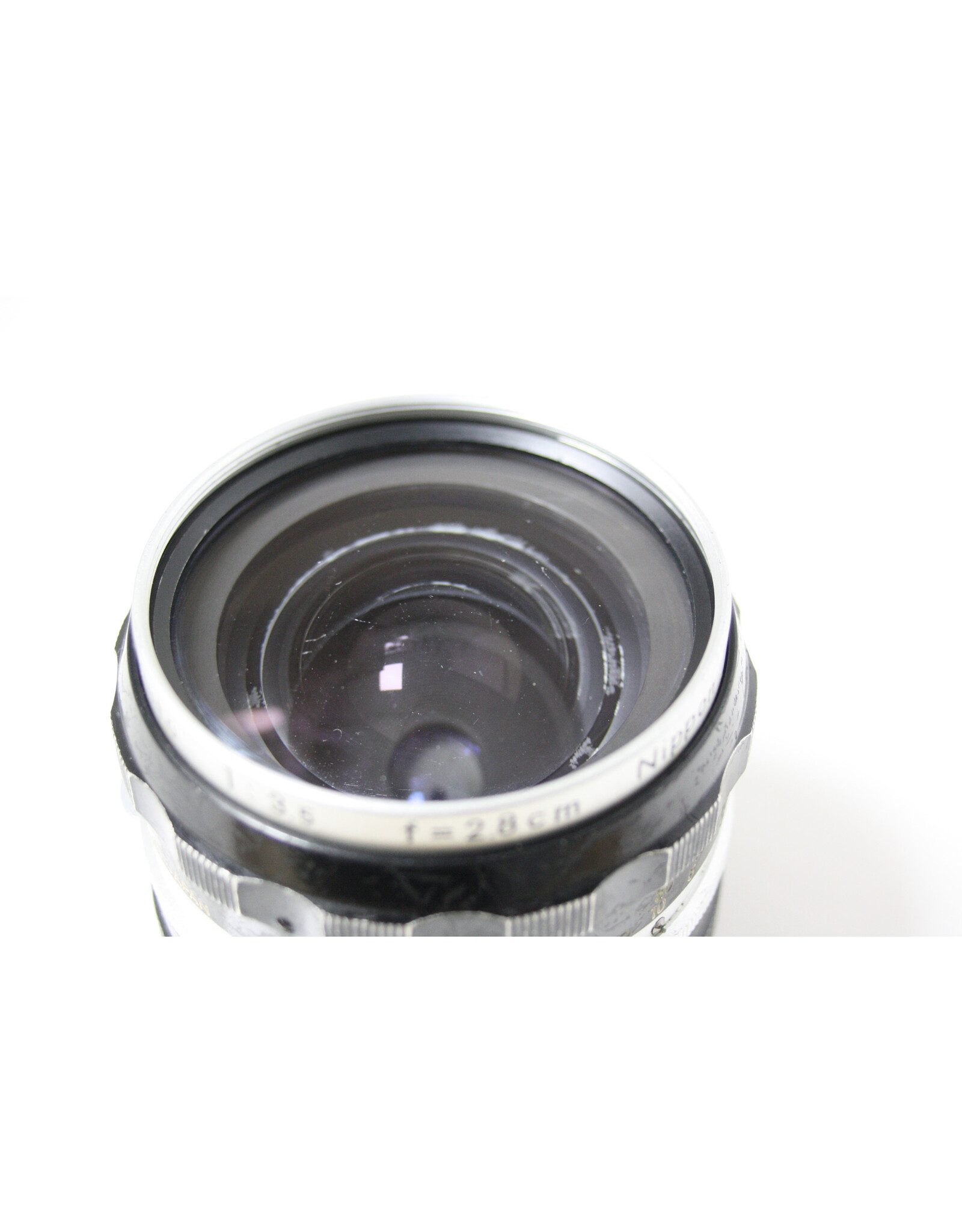
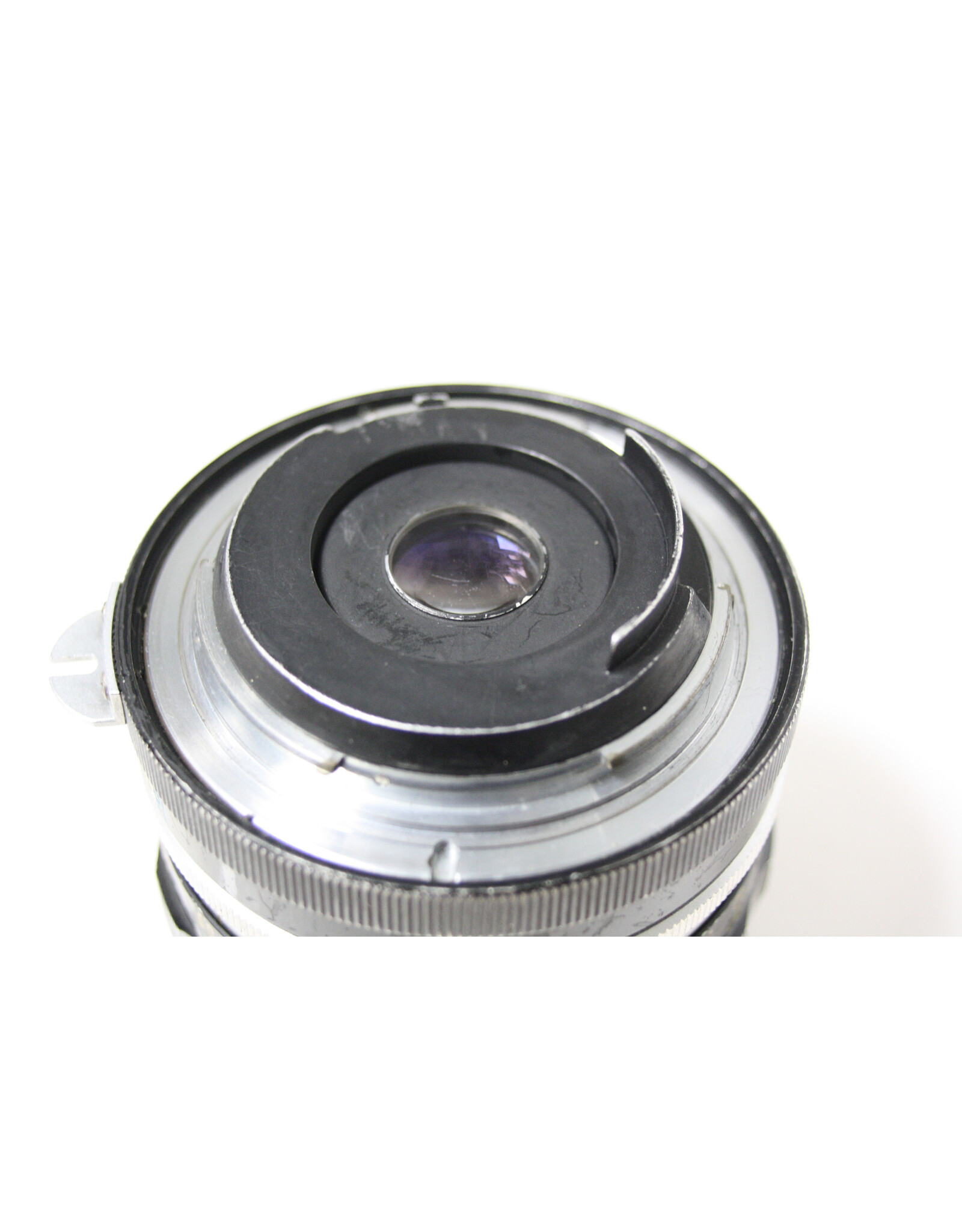
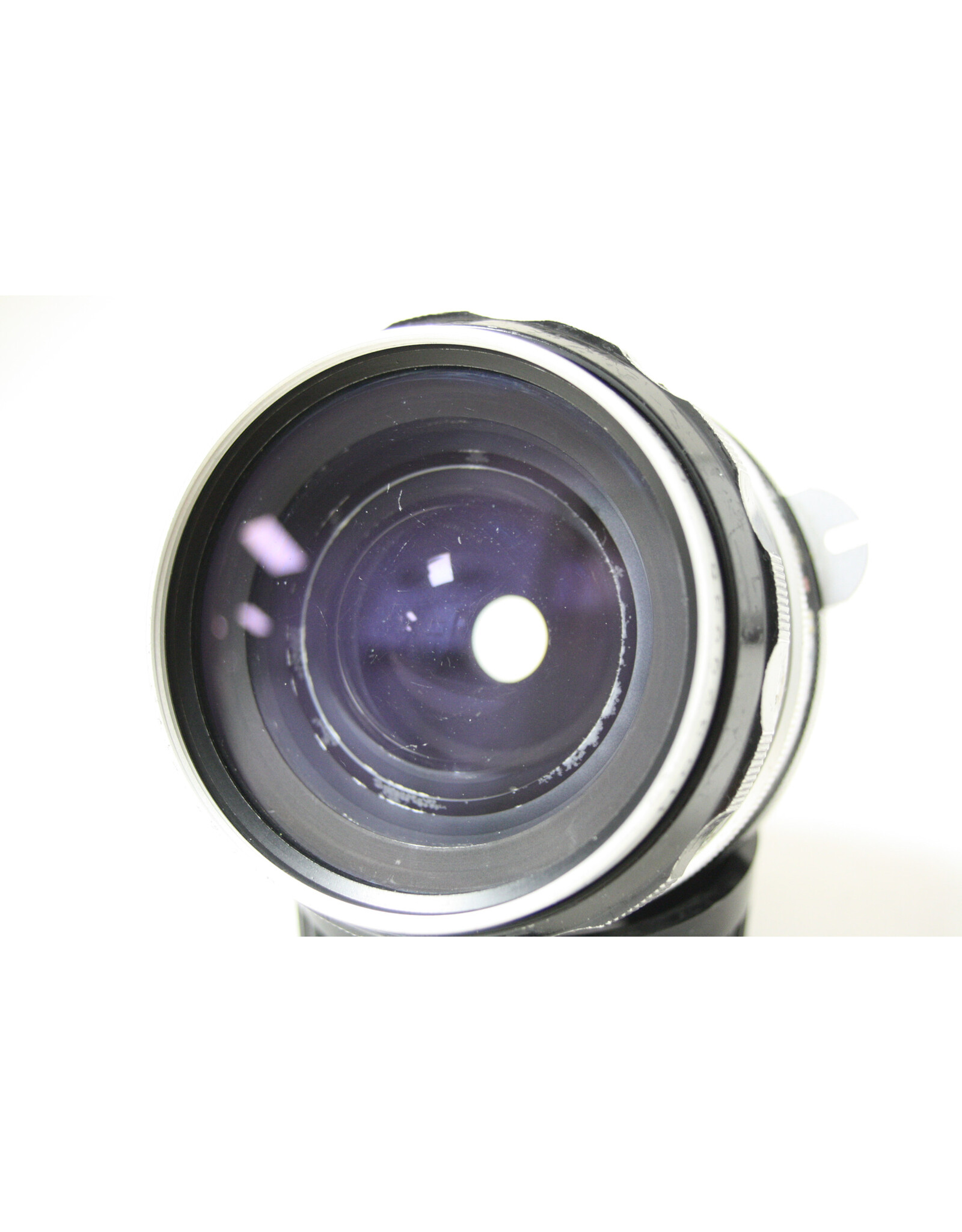
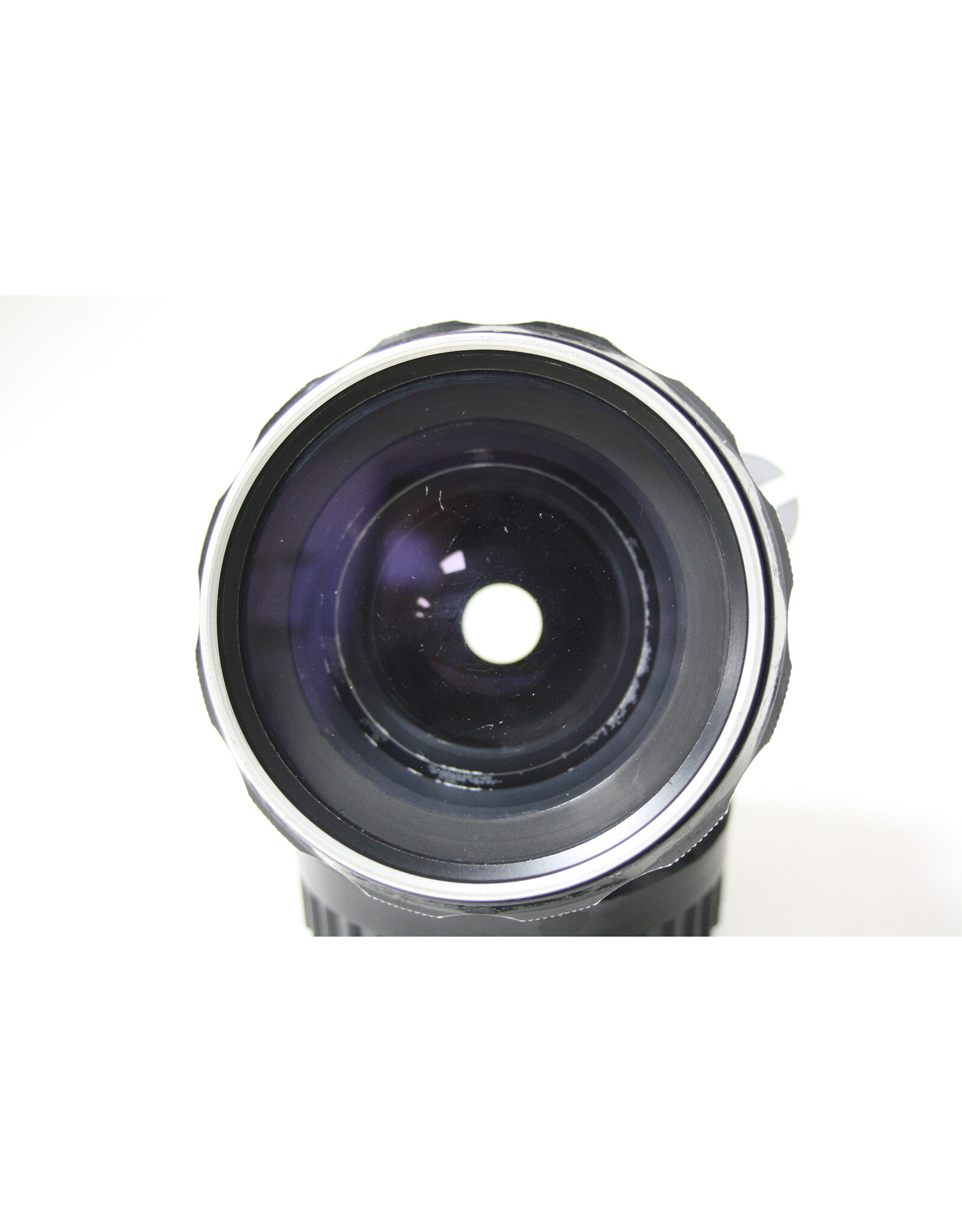
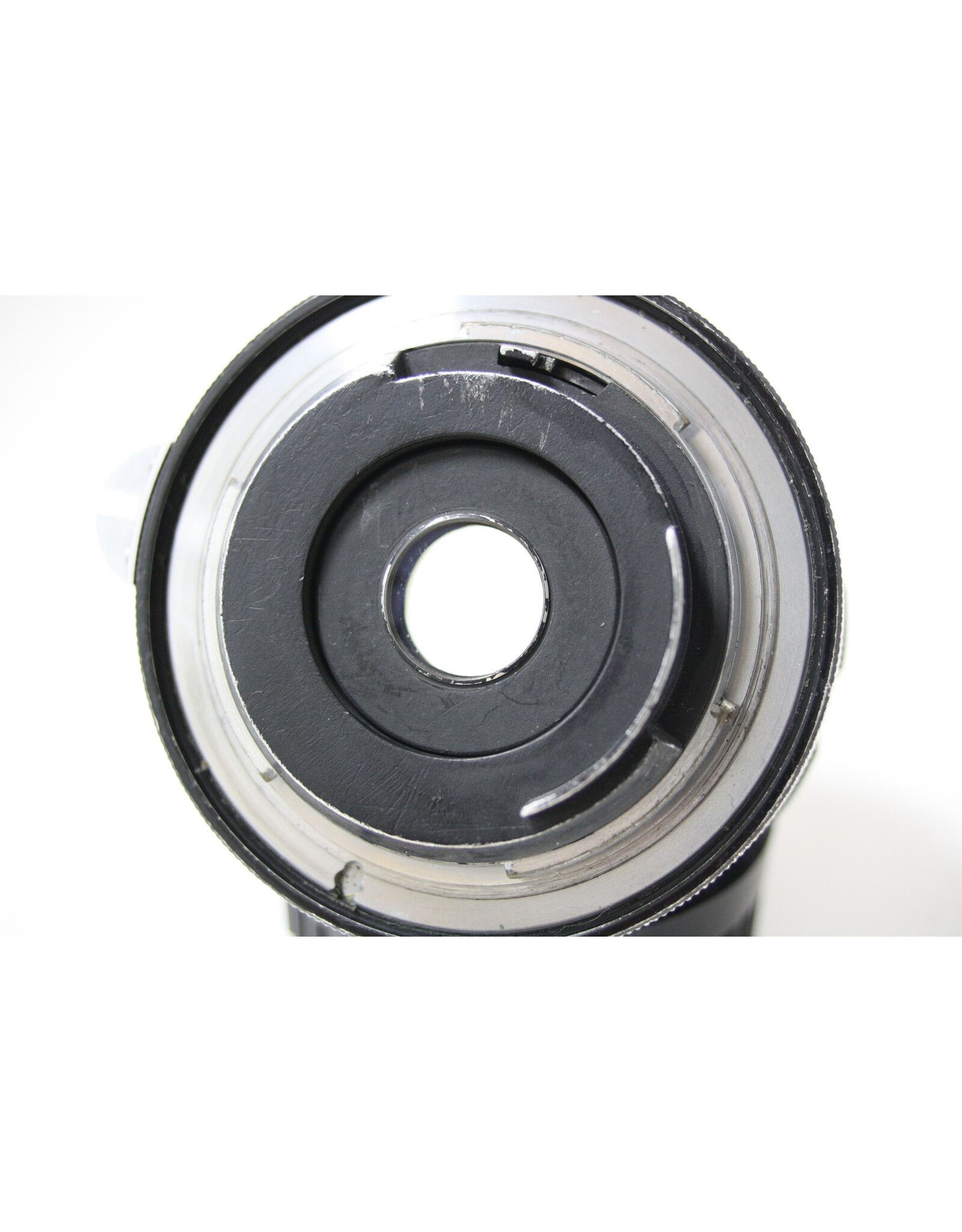
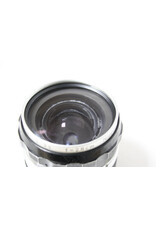
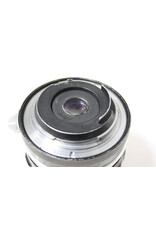
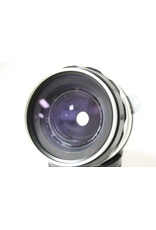
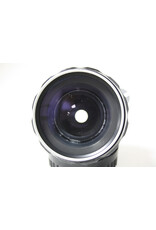
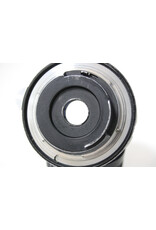
This lens is in good shape, it operates smoothly, and the glass inside is pretty clear. Unfortunately, there are scratches and scuffs on both the front and rear elements, although it is far more noticeable on the front element.
This lens was put into the market in March 1960, one year after the introduction of the Nikon F SLR camera. Although the specification is nothing but common one with rather slow in f-number at this time, the lens had been a high-specified wide-angle lens in those days. Moreover, this lens played a quite important role that the SLR camera was recognized as a multi purpose camera.
As you may know, a SLR camera has a mirror box equipped with a reflex mirror in the body.
Accordingly, a camera lens for attaching to the SLR camera is necessary to have long back focal length in order to avoid hitting the reflex mirror with the camera lens. At that time, a lens type having far longer back focal length than the focal length was not established, so development of a wide-angle lens required a completely new lens type.
On the other hand, in the rangefinder camera, various wide-angle lenses had been developed because of no restriction of back focal length, resulting in the irresistible superiority to the SLR camera.
Under these circumstances, the Nikon F camera released in 1959 was planed to be a multi purpose camera capable of corresponding every shooting condition surpassing the rangefinder camera.
Therefore, it was prime task to develop a high quality wide-angle lens in order that the Nikon F camera became a multi purpose camera.
"Do develop 28mm wide-angle lens having optical performance superior to the W-NIKKOR 28mm f/3.5 which had an established reputation for the Nikon S series camera." It was Mr. WAKIMOTO, Zenji, who took the order to take charge of development.
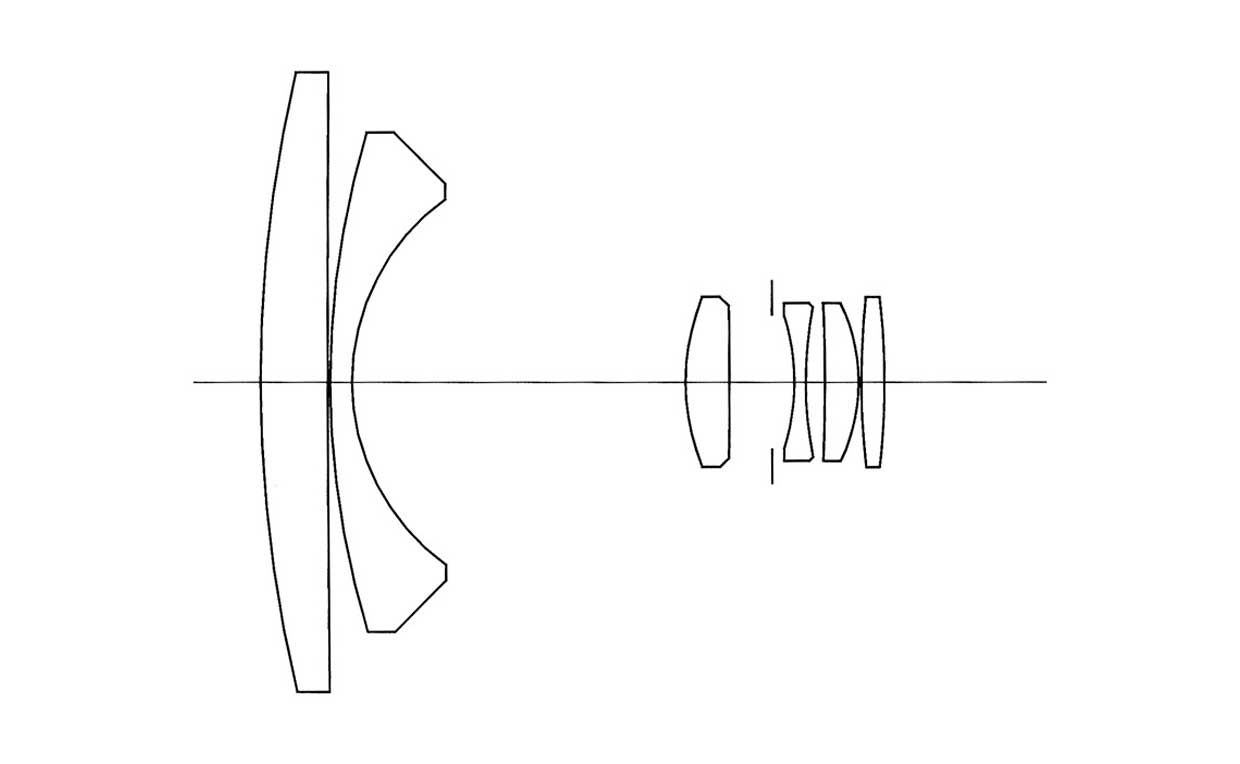
As shown in Fig. 1., the lens configuration is a reversed telephoto type (nowadays, this type is called "retrofocus type" turned from the product name) composed of:
The characteristic of the new lens configuration according to Mr. WAKIMOTO is that the lens configuration of the rear lens group is changed from "convexo-convexo-concave-convexo" having been used by conventional reversed telephoto type to "convexo-concave-convexo-convexo".
In conventional retrofocus type, the front lens group is composed of a convexo lens for correcting distortion and a concave lens for increasing the back focal length. However, the original lens configuration of the rear lens group of "convexo-convexo-concave-convexo" could not skillfully compensate coma produced by the front lens group, so it often happened that too much flare was produced at full aperture resulting in unsatisfactory optical performance.
By changing the lens configuration of the rear lens group to that of "convexo-concave-convexo-convexo", Mr. WAKIMOTO drastically improved coma produced on the periphery of the frame, which had been the weak point of the retrofocus type. Thus, a 28mm lens with high optical performance exceeding the W-NIKKOR 2.8cm f/3.5 of an orthometar type (one of symmetrical configuration types) was accomplished.
Although the lens was small in shape, the significance of the development was really great.

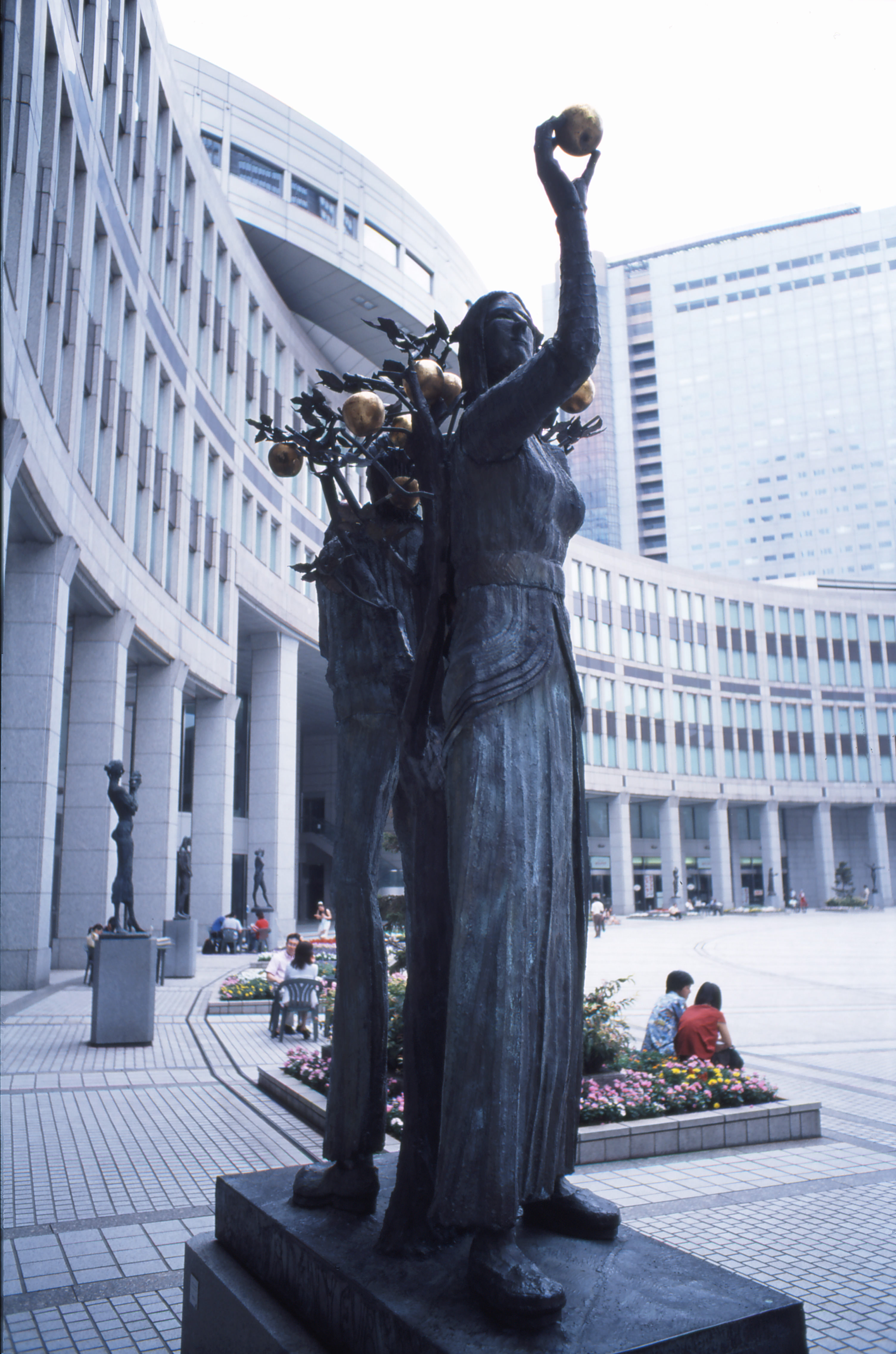
Let's take a look at how this lens performs with reference to the examples.
The lens with an established reputation for its performance does not yield to any existing lenses. The performance that clearly images the detail of a subject has razor sharpness and power with the aperture fully open. The reputation of Nikkor lenses having sharp and crisp contrast may have established by this lens.
The secret exists in the smallness of coma flare. Even if you take a night view or a star photograph with the aperture fully open, no serious coma flare can be seen. That's the reason why the lens has been habitually used by star photographers.
With the aperture fully open at f/3.5, the entire frame from the center to periphery is sharp and the sharpness and uniformity increase with stopping down the aperture. However, because of sufficient contrast with the aperture fully open, change in image rendition with respect to the aperture is hardly noticeable. As a result, this lens is very easy to use.
(Example 1.) is shot with the aperture stopping down at f/8. You can easily notice that the image is very sharp and distortion commonly associated with a retrofocus type wide-angle lens is very small.
(Example 2.) is shot with the aperture fully open. Since this lens is a wide-angle lens with relatively slow full aperture f-number of f/3.5, large defocus images cannot be expected even at full aperture.
At the aperture fully open, brightness of periphery of image field slightly decreases, but it is hardly recognized in the example.
Although the wide-angle lens gives quite faultless images as described above, the only weak point may be the relatively long closest-shooting distance. The lens cannot approach a subject closer than 60cm (2 ft.) from the film plane.
Since the lens had very high optical performance with perfectly corrected distortion, the degradation of optical performance according to the closed shooting distance, which is inevitably accompanying to the retrofocus type, was more conspicuous. Therefore, they reluctantly limited the closest shooting distance of the lens to 60cm (2 ft.) .