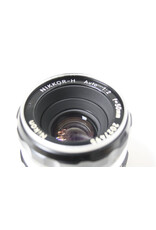
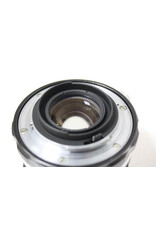
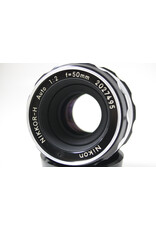
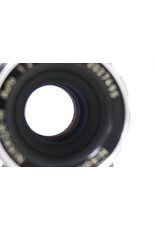

| Availability: | In stock |
| Delivery time: | Hurry! Buy Now before it is GONE! |
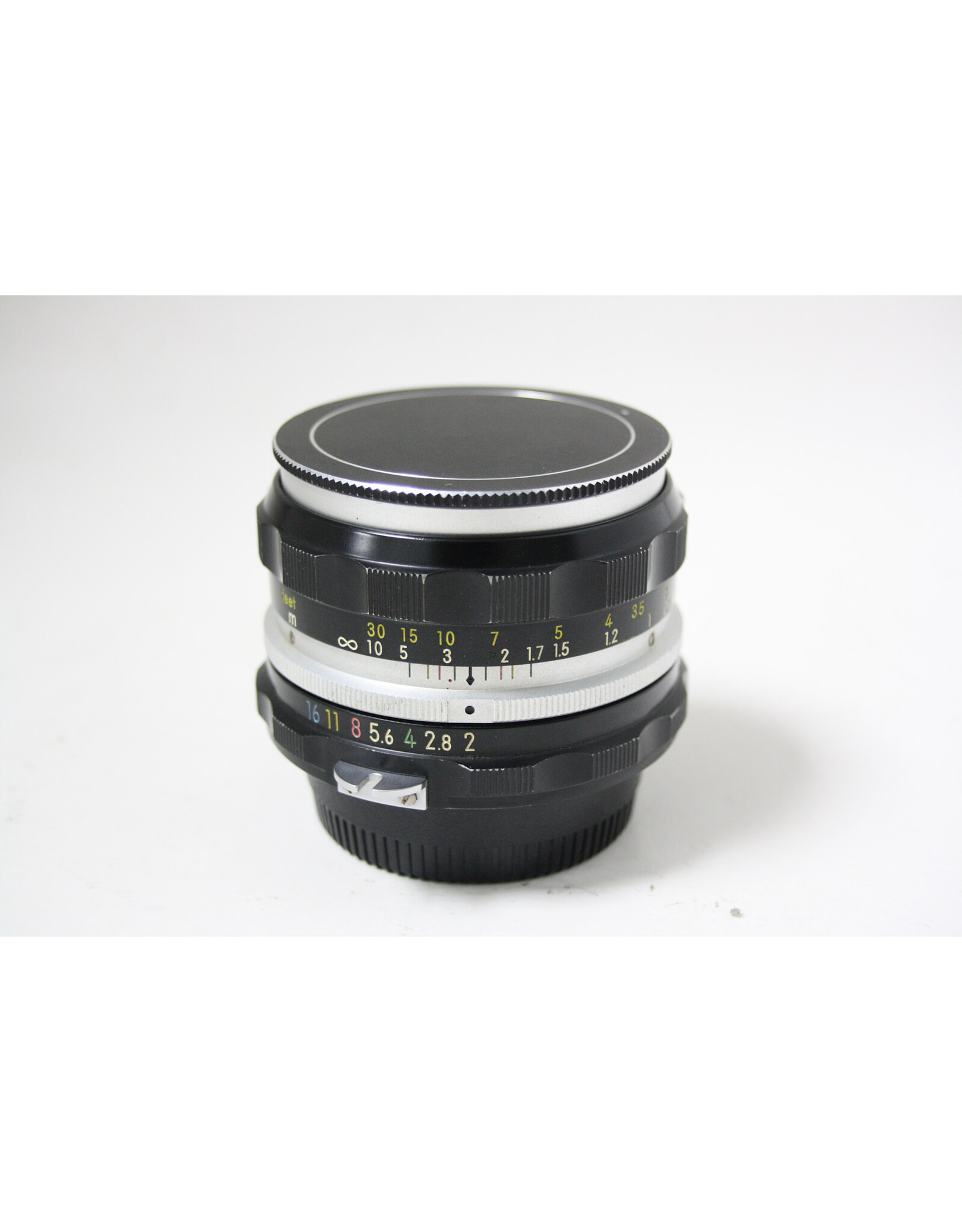
NOTICE: This is a pre-owned product. This item may not come with its original packaging, and may not have all of the original accessories. Camera Concepts thoroughly tests, and ensures the quality of all pre-owned products we advertise. See below for a more detailed description of the product.
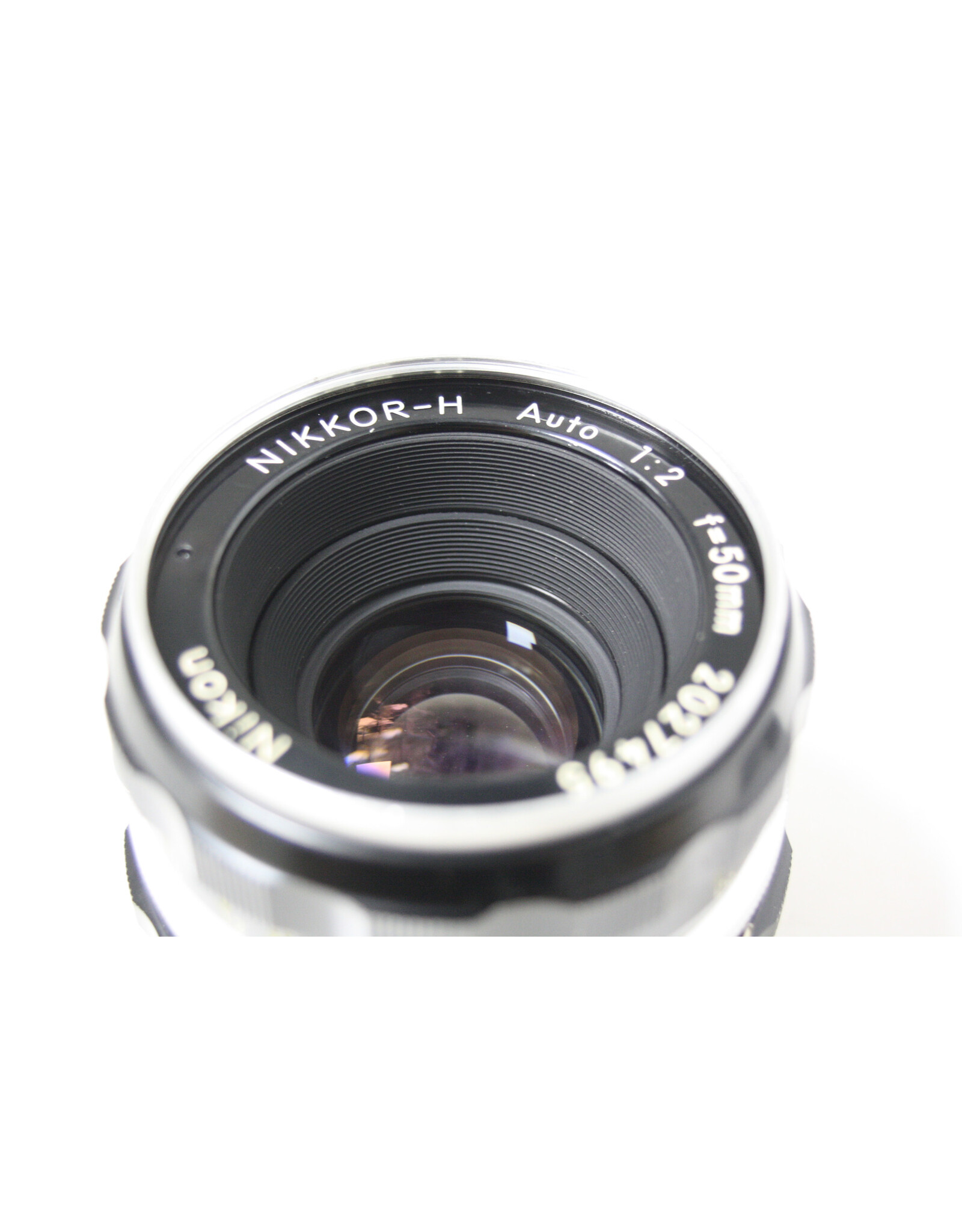
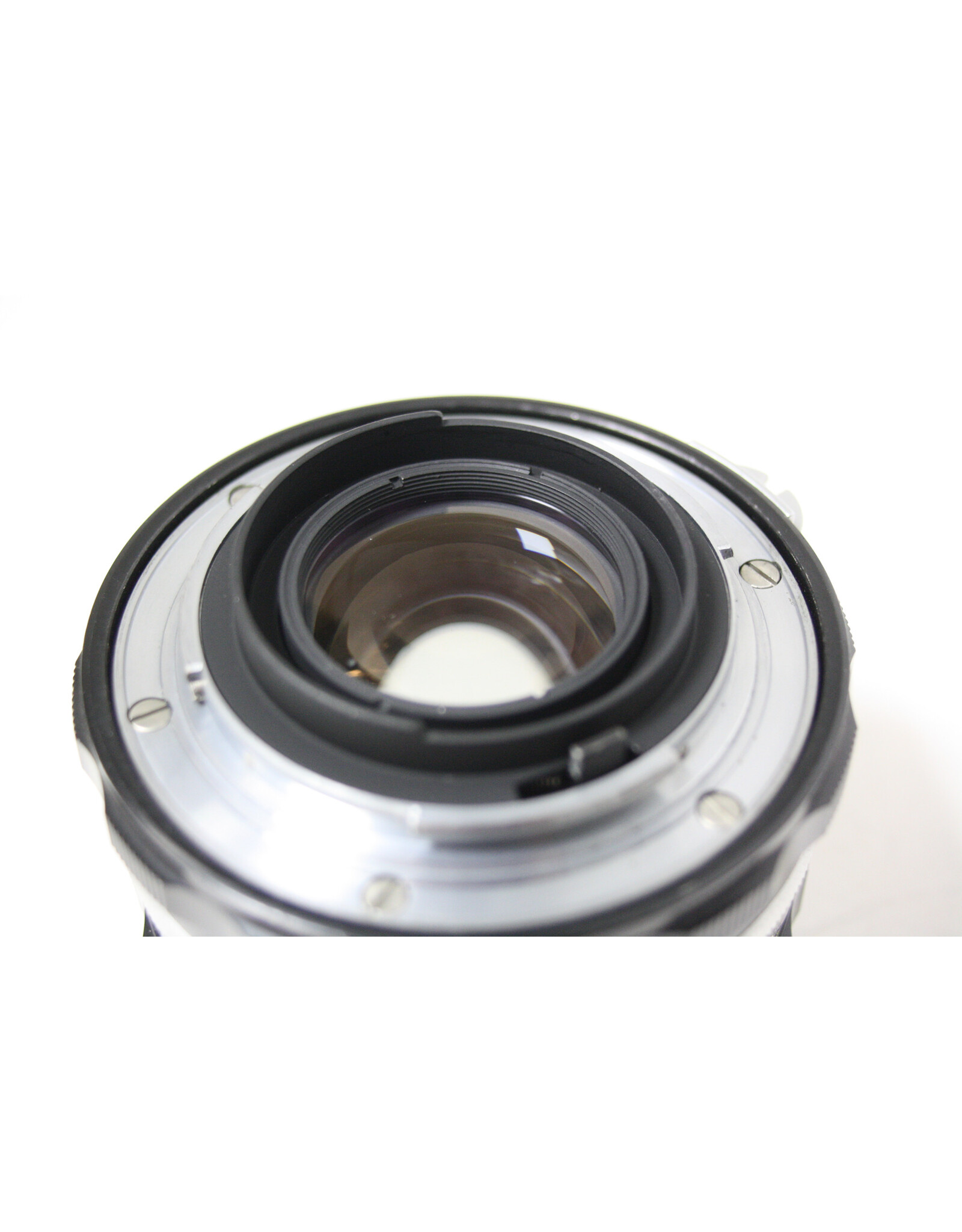
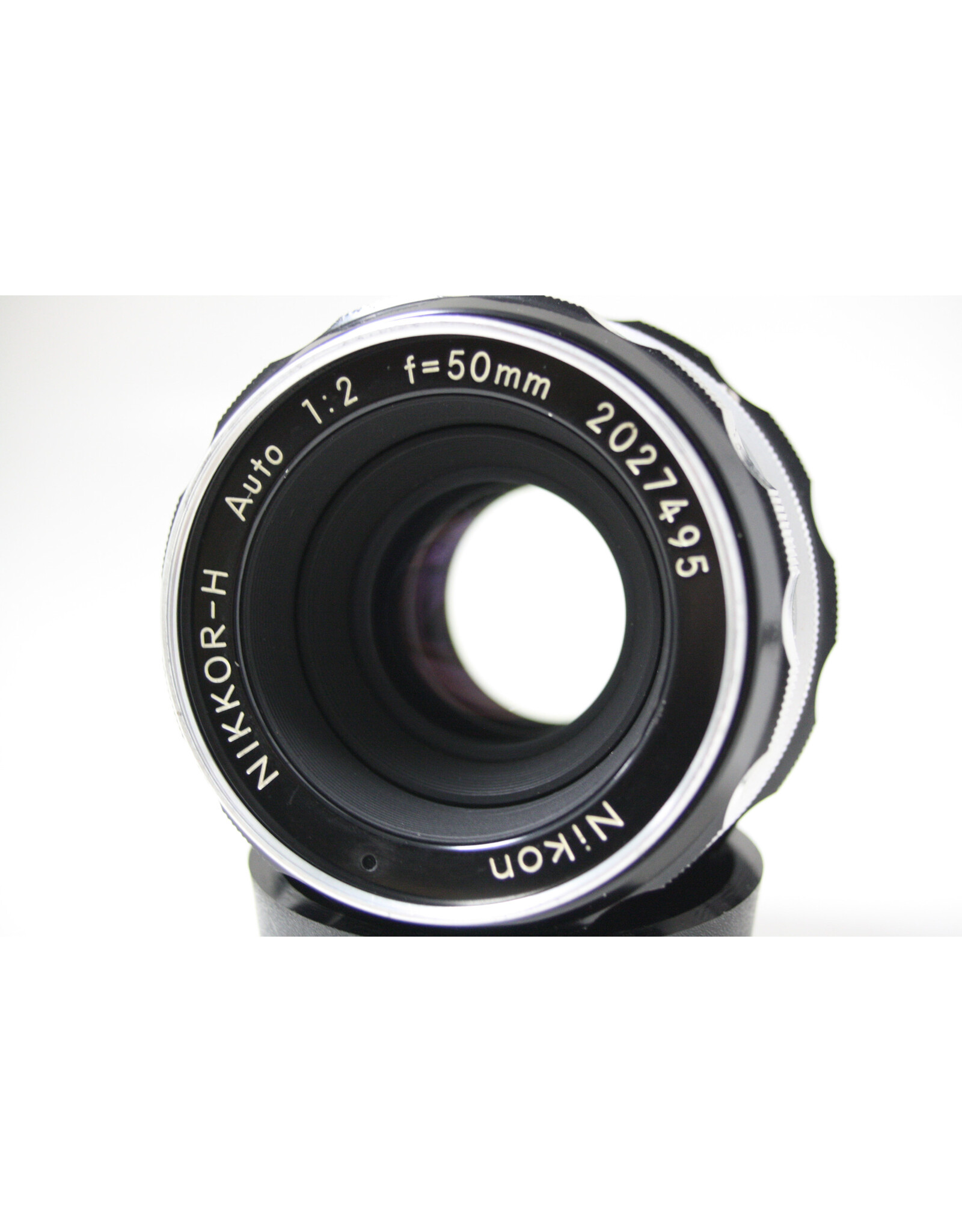
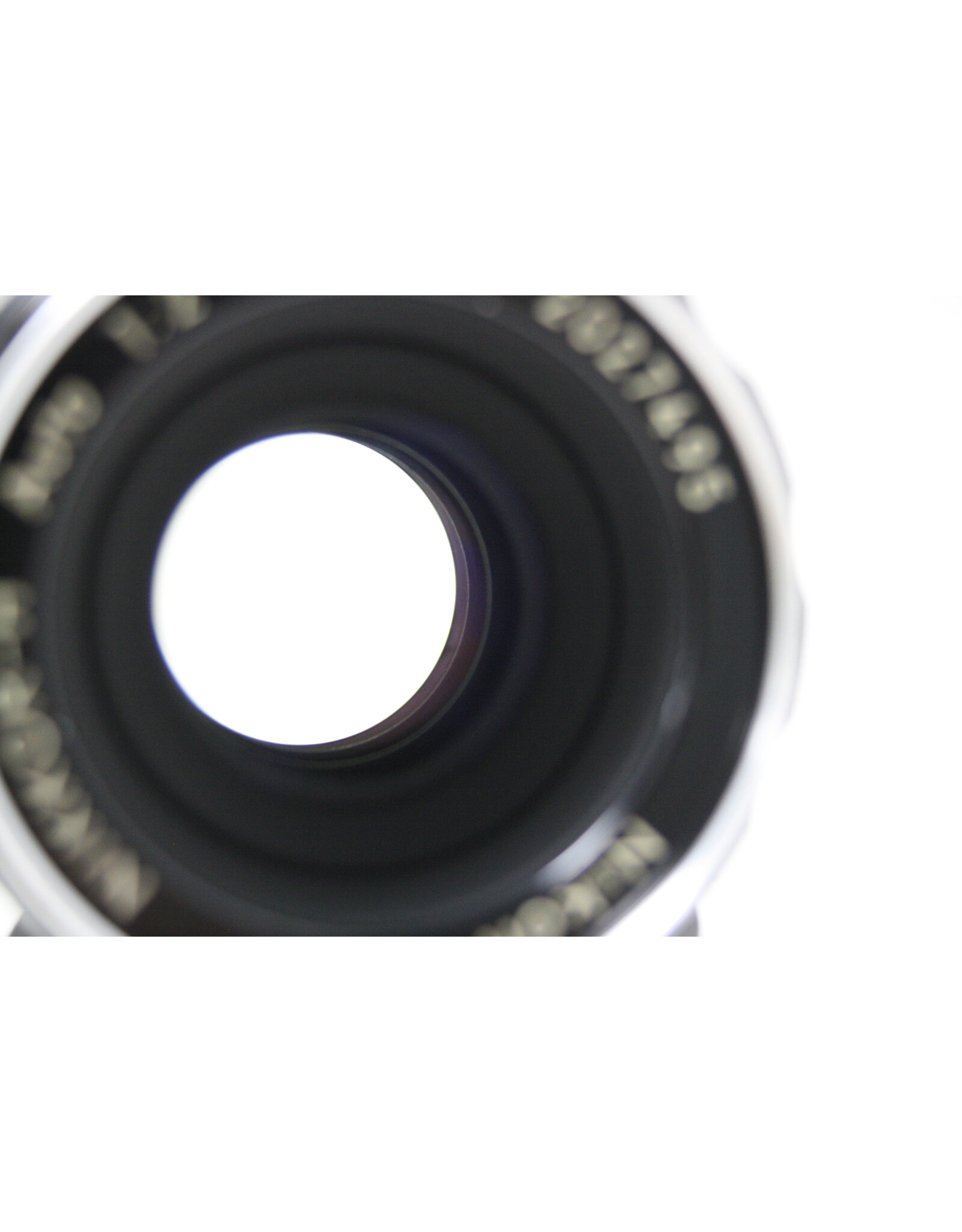
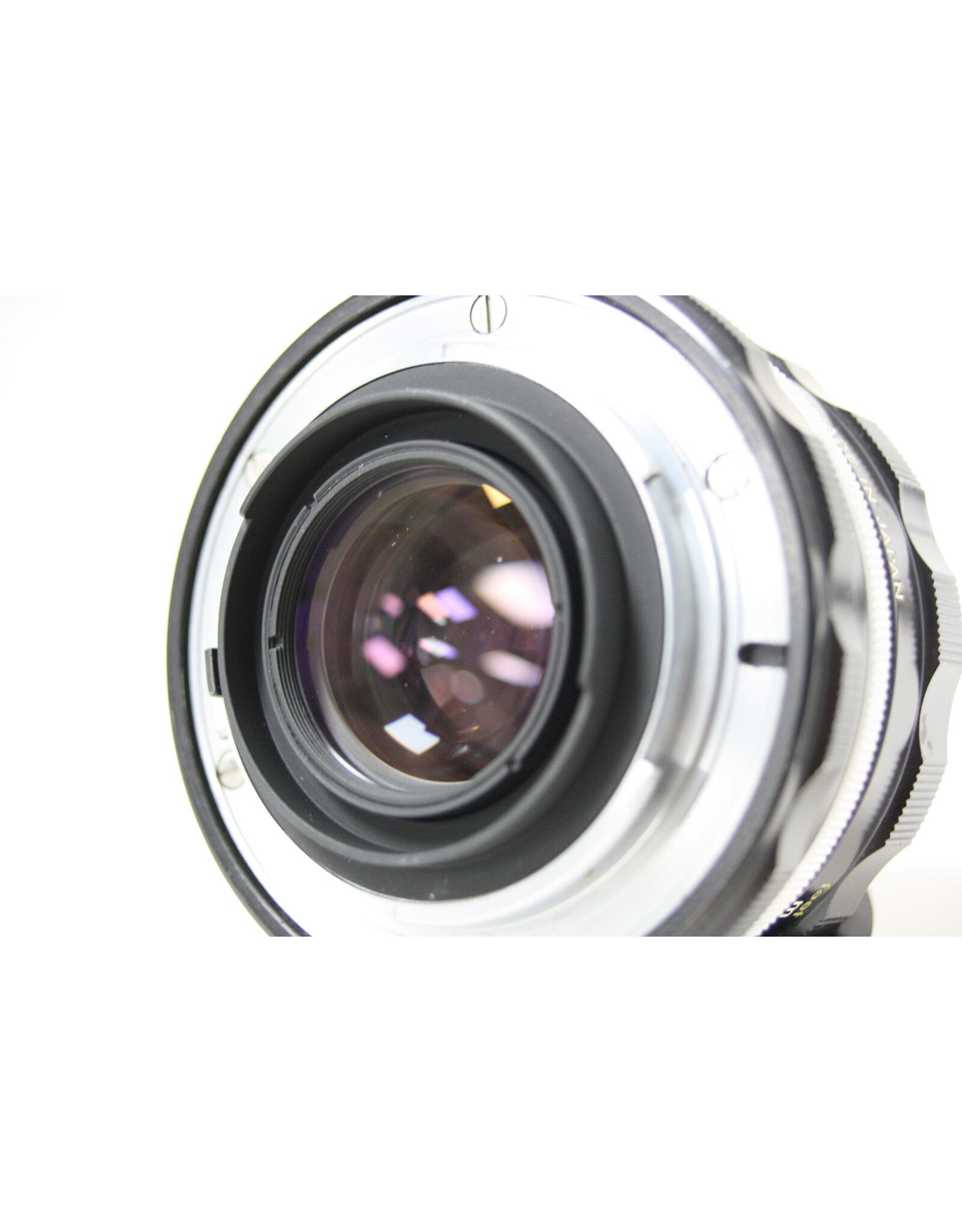
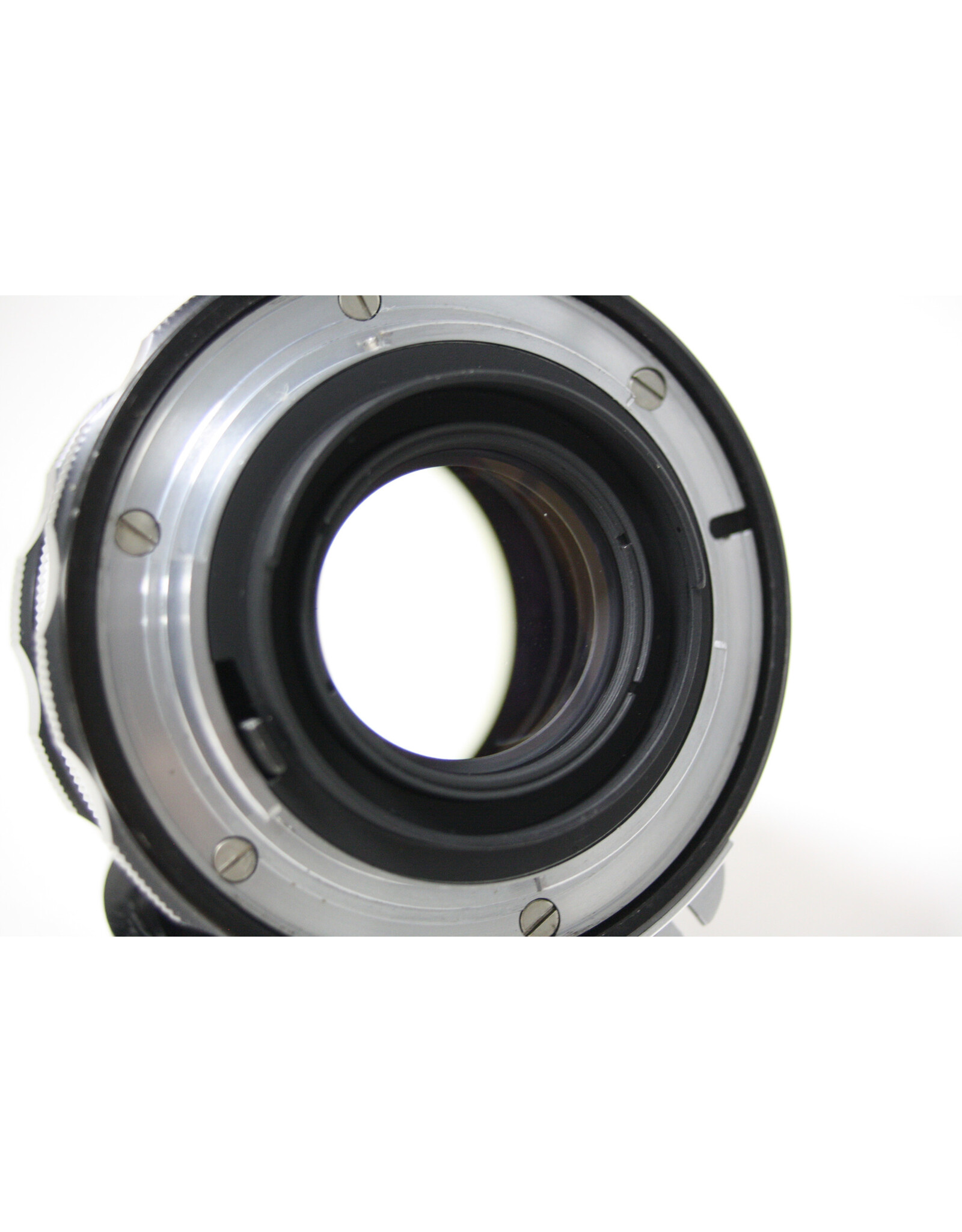
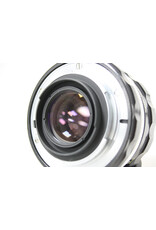
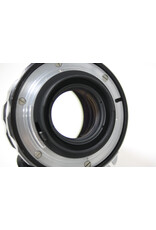
This lens is in excellent shape, it moves incredibly smoothly, and the glass is in fantastic condition, with some minor dust in between the elements, but nothing that should noticably impact image.
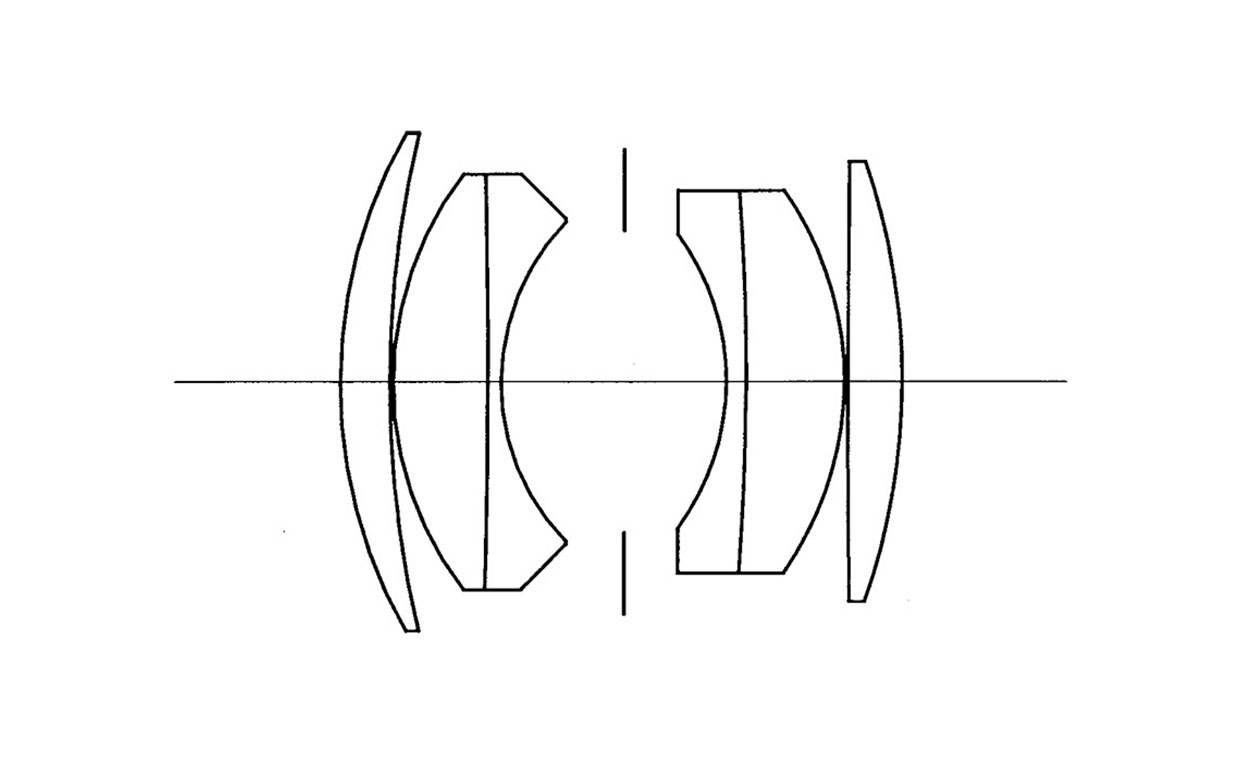
This lens went on the market five years after the Nikkor-S, with a new optical configuration - a four-group six-element orthodox Gaussian type.
With advances in optical design technology, a Gaussian type optical system was now capable of providing adequate back focus for the design of a 50mm lens.
As can be seen from (Fig. 1.), the Gaussian type has a symmetrical arrangement of a convex lens and a concave doublet on either side of the aperture stop, with the concave surfaces facing the aperture stop. This type is widely used for large aperture normal and medium telephoto lenses.
A feature of this Gaussian type is the ability to correct the chromatic aberration and spherical aberration which tends to occur with a large aperture lens, and this lens exploits this characteristic to provide excellent correction of chromatic aberration.This lens also exploits glass with high refractive index and low dispersion to provide a much flatter image than the Nikkor-S.
The drop in performance for close-up work is small, and not only is the high quality maintained at the closest focusing distance of 0.6m (2ft.), but the lens also produces high quality when used on a bellows or extension rings for macrophotography.
The reasonable f/2 aperture means that coma can be easily corrected, and the sagittal coma flare which is a problem in large aperture lenses (turning points of light near the edge of the image into comet tails) is also relatively low.
By reducing the aperture by two stops, an image can be obtained with high contrast right to the edge of the image.
This lens has a delicate balance of spherical aberration and residual peripheral coma flare, which together with the outstanding image flatness gives excellently uniform imaging over the whole image area from full aperture.
If we are just considering the image uniformity, then even among the many excellent lenses there are in this normal focal length, this is a top class item.
Thus, with few faults, this lens can stand comparison with the latest designs for its impressive performance. If there must give a drawback, it might be the very slight barrel distortion.
Of course this is absolutely no problem for normal work, but can slightly intrude in architectural work or macrophotography.
This lens exhibits a large change in imaging characteristics, from a distinctive fine and delicate image when fully open, to a crisp, high contrast when stopped down to f/4 or f/5.6.
If you own this lens, it is recommended you try taking a series of shots of a subject such as a nighttime scene, which is subject to flare, starting will the aperture stop fully open, and going down one stop for each exposure.
With the aperture stop fully open, light sources all over the image are surrounded by flare, yielding a fantastic image as though covered by a veil.
Except for the corners, there is little change in the shape of the flare, giving uniform flare across the image, and the flare core is small and neat.
This is related to the fine and delicate image the lens produces when fully open.
Going down one stop to f/2.8, the central flare is reduced, but still largely remains around the periphery.
Stop down to f/4 to f/5.6, and the flare is completely eliminated, and the image is sharp all the way to the corners.
The aperture stop is normally used to control exposure, soft focus effects, and depth of field, but having an idea of the changes in imaging characteristics with variations in the aperture will enable you to get just that little extra from the lens characteristics. One object is to find the aperture which gives you just the kind of image you like.